
The Field of Attention: A Modern Fairy Tale About Google, Search and Small Business
Before continuing, I would like to reassure readers that I have not entirely lost my mind. At this point, some readers may reasonably suspect that I have spent too much time alone with a laptop and not enough time outdoors.
What follows is best understood as a modern fairy tale for the digital age.

Once upon a time, beyond the towns and roads, there existed an enormous green field.
The field stretched further than the eye could see. It shimmered each morning beneath the rising sun and swayed gently in the evening breeze. Millions upon millions of tiny blades of grass lived there together.
Each blade believed itself small and unimportant. Some blades spent their days searching for answers. Some compared prices. Others shared stories, opinions, recipes, photographs of holidays, or argued loudly about politics with neighbouring blades they had never actually met. The field was noisy, busy, distracted and endlessly alive.
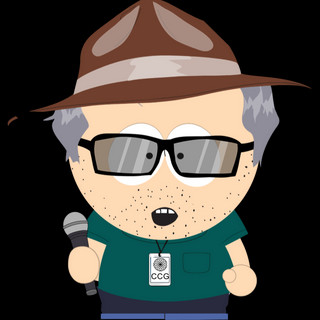
Watching over it all was a great farmer named Mr McGoogle.
Now the farmer did not eat the grass himself. That was never his way. Instead, each morning, the gates of the field were opened to cows.
At first there were only a few. A local baker. A travelling carpenter. A bookseller. A man selling fishing rods. A woman making candles from a shed behind her cottage.
The cows wandered gently among the grass, grazing quietly upon attention. And from this grazing, milk was produced. Not much from any single cow, only a spoonful here and there. But there were many cows and many spoonfuls, and over time the spoonfuls became rivers, and the rivers became oceans.
The farmer became wealthier than anyone could possibly imagine.
Still, the farmer understood an important truth. If the field became weak, barren, or poisoned, the cows would stop grazing and the milk would stop flowing. So he worked constantly to improve the land. Weeds were removed, broken fences repaired, new signposts appeared, fresh water was diverted where needed, and maps were drawn to help the cows find the hungriest patches of grass.
And for many years, almost everyone prospered. The grass received answers, the cows grew fat and content, and the farmer watched over the kingdom from a vast glass tower filled with glowing screens.
But slowly, something changed.
The small cows began disappearing.
In their place came enormous industrial beasts. Great lumbering creatures covered in advertising banners and ringing bells. Some travelled in herds so large they blocked the sunlight.
The small baker, the carpenter and the candle-maker were still there somewhere, but they were harder to find now, and the field stretched further than ever.
Others employed clever foxes whose only job was to discover where the sweetest grass could be found before anyone else arrived. Entire industries appeared whose sole purpose was understanding why one cow stood happily upon a hill while another vanished unnoticed into the mud.
Soon the field itself began to change. Certain patches of grass were trampled flat beneath endless grazing. Bright painted signs appeared everywhere. Some cows learned how to shout louder than others, while others discovered ways to disguise themselves as helpful villagers while secretly selling miracle products of highly questionable quality.
The grass grew confused. Many blades no longer knew whether they were discovering things naturally or simply being led carefully toward whichever cow had paid most generously for the privilege.
And yet the farmer continued smiling, for the milk production had never been greater.
By now the cows had become so dependent upon the field that they could scarcely survive outside it. Some spent fortunes simply trying to stand closer to the greener grass. Others hired advisers, wizards and data alchemists to interpret the mysterious rules of the farmer's ever-changing land.
Meanwhile, the grass carried on growing. It searched for answers, clicked on links, scrolled through endless pages, compared prices, argued with neighbours, laughed at amusing stories and occasionally bought something it had never intended to purchase in the first place. Often unaware that the entire kingdom depended upon its quiet daily attention.
Now, every fairy tale traditionally ends with the words: and they all lived happily ever after.
But modern fairy tales are rather more complicated than that.
Because somewhere beyond the hills, rumours had already begun to spread of new kingdoms; kingdoms where the cows no longer needed the field quite so much, where answers arrived before questions had even fully formed, and where the farmer himself might one day be replaced by something altogether stranger.
And in the distance, the old farmer stood silently at the edge of the field, watching the horizon very carefully indeed. For the first time in many years, he was no longer entirely certain what would happen next.
If you run a small business, you are somewhere in that field.
You may be one of the remaining small cows.
You may be competing with the industrial herds.
You may even be paying one of the foxes to help people find you.
But wherever you stand, one question matters more than almost any other.
Can the grass still find you?


Comments